A curriculum that builds in one direction
Every subject taught at Royal Kids connects to what came before it and what comes after, so a child's seventh year of school feels like a continuation, not a series of restarts.
How the programme is structured
The school year runs across three terms, each concluding with formal assessment from Grade 1 upward. Pre-Primary pupils are assessed through observation rather than written tests, in line with how young children actually demonstrate what they know.
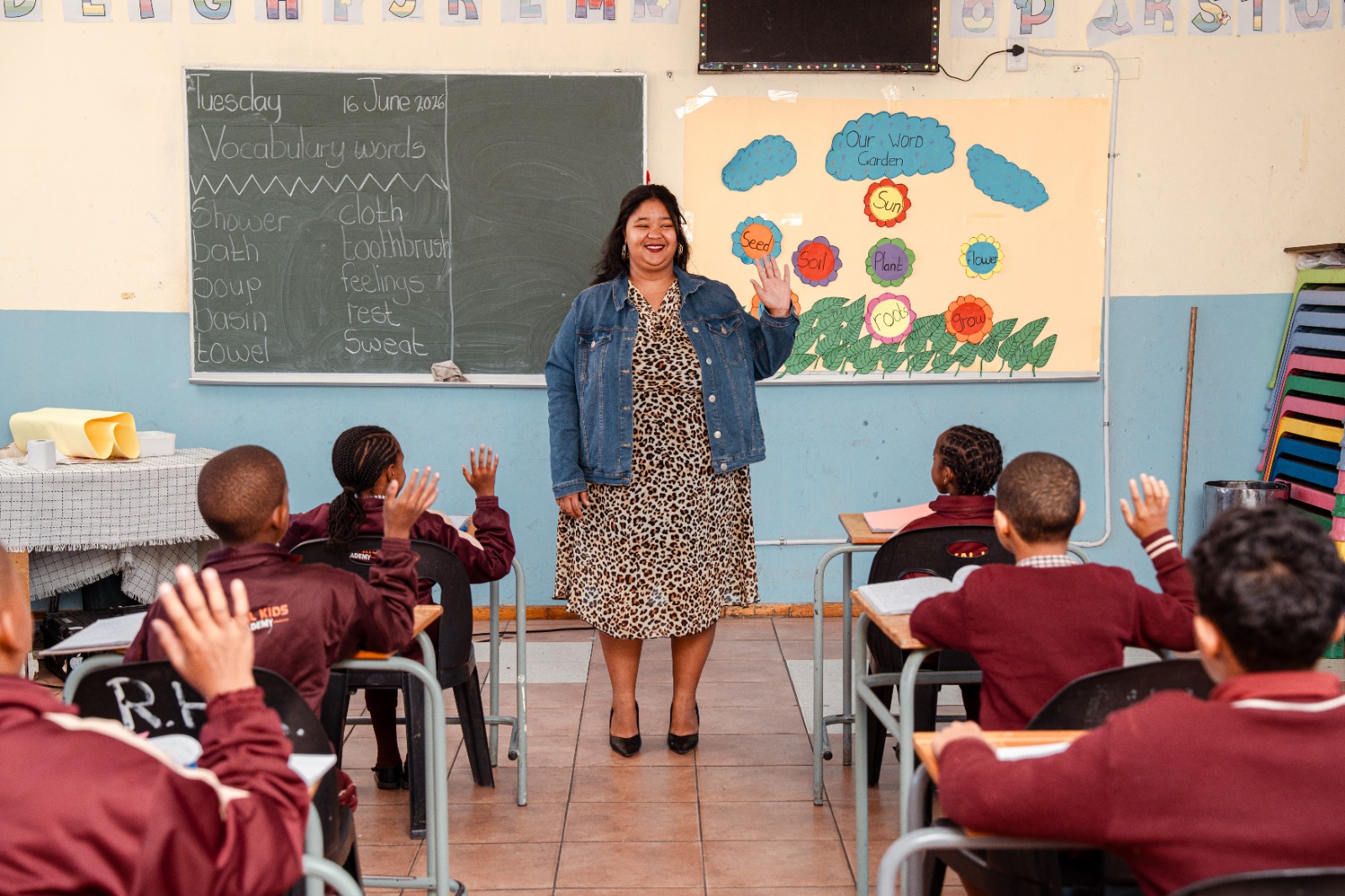
Class teachers in Pre-Primary and Lower Primary teach most subjects themselves, which keeps the school day coherent for younger children. From Grade 4, pupils begin moving between subject specialists for Mathematics, Natural Sciences, and English, easing the transition into the subject-based timetable they will meet in secondary school.
Pre-Primary: Reception and Grade 0
We believe that childhood is a time of wonder, discovery and limitless possibility. Our inquiry and play-based approach offers fresh and vibrant learning opportunities every day. Our holistic and integrated approach ensures that emergent literacy and mathematical skills are woven naturally into both classroom and outdoor experiences.
Our outdoor spaces are an extension of the classroom, offering opportunities for exploration, risk-taking, collaboration and physical development. Music, movement and physical developmental lessons led by specialist teachers provide joyful opportunities for creative expression and emotional release.
We are deeply committed to developing the whole child. Every child is unique, and our balanced programme honours individual strengths, interests and developmental pathways.
Phonics & Early Literacy
Letter-sound correspondence, blending, and sight word recognition.
Number Concepts
Counting, sorting, simple addition, and pattern recognition.
Fine Motor Skills
Pencil grip, cutting, and tracing exercises that prepare the hand for writing.
Daily Routine & Structure
Consistent classroom rituals that build independence and attention span.
Lower Primary: Grade 1 to 3
Royal Kids Private School encourages children to adopt a can-do, positive mindset. The keystone of our caring and nurturing classroom environment is our belief that each child is unique with their own strengths, weaknesses, and learning styles. We believe that children learn best when they are happy, stimulated and learning through doing. This methodology helps them develop a strong foundation in reading, writing and arithmetic, which they use as a foundation for future learning.
Children are encouraged to become independent, accountable individuals by taking responsibility for their behaviour, their own work, and their belongings, through a servant leadership approach that starts with responsibility for the self.
English
Reading comprehension, creative writing, grammar, and spelling.
Afrikaans
An introductory second language, building basic vocabulary and conversation.
Environmental Studies
An introduction to the natural and social world around the child.
Mathematics
Number operations, basic fractions, time, money, and measurement.
Religious and Moral Education
Values, character, and respect for self and others.
Arts
Drawing, painting, and craft activities that encourage creative expression.
Information Technology
An introduction to computers and basic digital literacy skills.
French
An introductory second language, building basic vocabulary and conversation.
Upper Primary: Grade 4 to 7
At Royal Kids Private School, Learning for Life is a mindset and CAN DO is an attitude. There is a deliberate, progressive increase in nurturing independence, personal responsibility, and resilience through Upper Primary. Subjects expand to include Natural Sciences and Health Education, Social Studies, Elementary Agriculture, and Life Skills, alongside continued language and mathematics study, equipping learners with a broad, practical foundation for secondary school.
English
Formal grammar, comprehension, and continued language study.
Afrikaans
Continued second language study, building on the foundation from Lower Primary.
Mathematics
Pre-algebra, geometry, data handling, and problem solving.
French
Continued second language study, building on the foundation from Lower Primary.
Natural Sciences and Health Education
Basic physical and life sciences, with a focus on observation, method, and personal health.
Social Studies
Namibian history, geography, and civic education.
Elementary Agriculture
An introduction to farming principles, plant and animal care, and sustainable land use.
Life Skills
Practical guidance in personal wellbeing, relationships, and responsible decision-making.
Learning for Life Leadership Programme
This culminates in Grade 7, where every pupil has the opportunity to take part in the formal yet voluntary Learning for Life Leadership Programme, structured around five areas of personal development:
- School Service
- Community Service
- Physical Challenge
- Organisation
- Acquisition of a New Skill
Our approach to discipline is progressive: we aim to Catch Them Doing It Right. Pupils help draw up class contracts at the start of each year, with all expectations guided by respect for self, for peers, for teachers, and for the wider community, recognising that everyone makes mistakes and deserves help to self-correct.
Assessment and reporting
Parents receive a written progress note each month and a full report at the end of every term. From Grade 1, formal tests are written mid-term and end-term, with results discussed at a scheduled parent-teacher consultation.
| Grade | Assessment type | Frequency |
|---|---|---|
| Reception & Grade 0 | Observation-based | Ongoing, reported monthly |
| Grade 1 to 3 | Short written tests | Mid-term and end-term |
| Grade 4 to 7 | Formal examinations | Mid-term and end-term, all subjects |
Languages of instruction
English is the primary language of instruction throughout the school. Afrikaans and French are taught as additional languages from Grade 1 through Grade 7, building steadily from introductory vocabulary and conversation in Lower Primary to continued formal study in Upper Primary.
Sit in on an actual lesson
The clearest way to evaluate a curriculum is to watch it being taught. Visits include time in a classroom appropriate to your child's age.